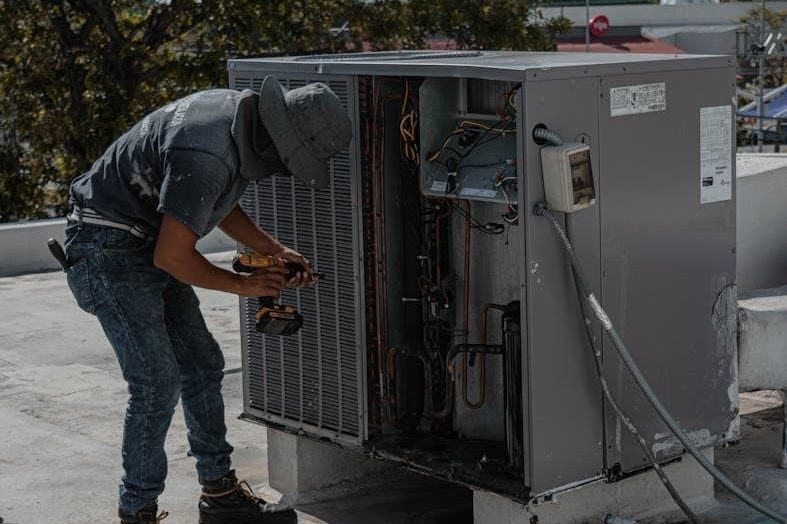
AAON RN Series Service Manual: An Overview
AAON’s RN Series manuals provide crucial installation, operation, and maintenance guidance for HVAC technicians, ensuring peak efficiency and safe servicing of units.
AAON’s RN Series represents a significant advancement in packaged rooftop units, designed for robust performance and energy efficiency. These units cater to a diverse range of commercial and industrial applications, offering customizable configurations to meet specific project demands. The series incorporates innovative features and controls, notably the VCCX2 controller, for precise operation and monitoring.
Understanding the intricacies of the RN Series requires a dedicated service manual, providing technicians with essential information for proper installation, maintenance, and troubleshooting. This manual serves as an indispensable resource, detailing safety precautions, component locations, and diagnostic procedures; Proper adherence to the guidelines within ensures optimal unit lifespan and minimizes potential downtime. Factory-trained technicians are recommended for startup and service.
RN Series Features and Options
AAON RN Series units boast a wide array of features and options, enhancing their adaptability and performance. These include various cooling capacities – ranging from RN-006 to RN-140 – and customizable configurations to suit diverse HVAC needs. Options encompass economizers, modulating hot gas reheat, and variable frequency drives (VFDs) for improved energy savings.
The VCCX2 controller is a central feature, providing advanced control and monitoring capabilities. Technicians utilizing the service manual will find detailed information regarding these options, aiding in accurate diagnosis and repair. Understanding available configurations is crucial for effective service, ensuring components are correctly identified and maintained. The Next Gen RN models offer scheduled maintenance and troubleshooting guidance.
Installation Procedures
Proper installation, as detailed in the manual, requires a factory-trained technician, focusing on unit placement, electrical connections, and precise refrigerant charging verification.
Initial Unit Placement and Setup
Careful consideration must be given to the location of the RN Series unit, ensuring adequate clearance for service access and proper airflow. The installation manual emphasizes the importance of a level and stable foundation to minimize vibration and noise. Before commencing installation, thoroughly inspect the unit for any shipping damage.
Confirm sufficient space around the unit for required maintenance procedures, including coil cleaning and filter replacement. Adherence to local codes and regulations regarding clearances is paramount. Proper ductwork connections are critical for optimal system performance, and should be sealed to prevent air leakage. The manual details specific requirements for condensate drain lines, ensuring proper drainage and preventing water damage.
Finally, verify that all necessary accessories, such as isolation pads and weather covers, are installed correctly to protect the unit and enhance its longevity.
Electrical Connections and Wiring
Prior to making any electrical connections, absolutely disconnect power to the unit at the main breaker. The service manual stresses the necessity of following all applicable electrical codes and safety guidelines. Verify the unit’s voltage and phase requirements match the available power supply. Use appropriately sized wiring and conduit, ensuring secure connections to prevent overheating and potential fire hazards.
Proper grounding is essential for safety and reliable operation. The manual provides detailed wiring diagrams illustrating the correct connections for power, control wiring, and safety devices. Double-check all connections before restoring power, and confirm proper voltage readings.
Always employ a qualified electrician for all electrical work, adhering strictly to the manufacturer’s instructions and local regulations.
Refrigerant Charging and Verification
Accurate refrigerant charging is critical for optimal performance and efficiency of the AAON RN Series units. The service manual emphasizes weighing in the refrigerant charge according to the unit’s specific nameplate data – do not overcharge or undercharge. Utilize calibrated gauges and a reliable vacuum pump to achieve a deep vacuum before charging.
After charging, carefully verify the superheat and subcooling readings, comparing them to the manufacturer’s specifications. Address any discrepancies promptly, as incorrect refrigerant charge can lead to reduced capacity, increased energy consumption, and compressor damage.
Leak testing is also crucial; employ an electronic leak detector to identify and repair any potential refrigerant leaks.
Operation and Control Systems
AAON RN Series units utilize the VCCX2 controller for precise operation, offering various modes and settings for optimized performance and system monitoring capabilities.
Understanding the VCCX2 Controller
The VCCX2 controller is the central nervous system of the AAON RN Series, providing comprehensive control and monitoring capabilities. Technicians should familiarize themselves with its interface and functions for effective troubleshooting and service. This controller manages various operational parameters, including temperature setpoints, fan speeds, and refrigerant pressures.
A key feature is its ability to display detailed system status information, including fault codes that pinpoint potential issues. Understanding these codes, as outlined in the service manual, is crucial for efficient diagnostics. The VCCX2 also allows for customized scheduling and remote access, enhancing operational flexibility. Proper configuration of the controller is essential for optimal unit performance and energy efficiency. Refer to the manual for detailed programming instructions and advanced settings.
Operational Modes and Settings
The AAON RN Series, governed by the VCCX2 controller, offers diverse operational modes to suit varying environmental needs. These include heating, cooling, ventilation, and automatic modes, each with adjustable settings. Technicians must understand how to navigate these options to optimize system performance. Key settings encompass temperature setpoints, airflow rates, and economizer control.
Advanced configurations allow for demand control ventilation and precise humidity management. The service manual details each mode’s functionality and recommended settings for different applications. Proper adjustment of these parameters is vital for maintaining occupant comfort and minimizing energy consumption. Incorrect settings can lead to inefficient operation or system malfunctions, highlighting the importance of thorough training and reference to the manual.
Monitoring System Performance
Effective monitoring of the AAON RN Series is crucial for preventative maintenance and identifying potential issues. The VCCX2 controller provides real-time data on key performance indicators, including supply and return air temperatures, refrigerant pressures, and compressor amperage. Technicians should regularly review these parameters to ensure optimal operation.
The service manual details how to interpret this data and recognize deviations from normal operating ranges. Trending capabilities within the controller allow for historical analysis, aiding in the diagnosis of intermittent problems. Furthermore, monitoring fault codes provides immediate alerts to system malfunctions. Consistent performance monitoring, guided by the manual, extends equipment lifespan and minimizes downtime.

Maintenance Schedules
AAON RN Series manuals emphasize scheduled maintenance, including filter replacement, coil cleaning, and belt/motor checks, for optimal performance and longevity.
Routine Filter Replacement
Regular filter replacement is paramount for maintaining optimal airflow and system efficiency within the AAON RN Series units. The service manual stresses the importance of adhering to a consistent schedule, dictated by operating conditions and environmental factors. Dirty filters restrict airflow, increasing energy consumption and potentially leading to component failure.
Technicians should inspect filters monthly, and replace them when visibly soiled or as recommended by the unit’s operational demands. Utilizing the correct filter type, specified in the manual, is crucial for effective filtration and preventing damage to the system. Proper filter installation ensures a secure seal, maximizing filtration efficiency and minimizing bypass. AAON emphasizes documenting all filter replacement activities for maintenance tracking purposes.
Coil Cleaning Procedures
Maintaining clean coils is essential for efficient heat transfer in AAON RN Series units. The service manual details specific procedures for both the evaporator and condenser coils, emphasizing the use of approved coil cleaners to avoid damage. Technicians must first disconnect power to the unit before commencing cleaning.
Carefully remove any debris from the coil surfaces, followed by applying the coil cleaner according to the manufacturer’s instructions. Thorough rinsing with water is crucial to remove all cleaner residue, preventing corrosion. Bent fins should be straightened with a fin comb to restore proper airflow. AAON recommends regular coil inspections and cleaning as part of a preventative maintenance schedule, ensuring optimal performance and longevity of the equipment.
Belt and Motor Maintenance
Proper belt and motor maintenance is vital for reliable fan operation within AAON RN Series units. The service manual stresses regular inspection of belt tension and alignment, recommending adjustments or replacements as needed to prevent slippage and premature wear. Motor bearings should be lubricated according to the manufacturer’s specifications, ensuring smooth and quiet operation.
Technicians must verify motor amperage draw to confirm it falls within acceptable limits, indicating healthy motor performance. Any signs of overheating, unusual noises, or vibration should be investigated immediately. AAON advises keeping a log of all maintenance performed on belts and motors, facilitating proactive replacement schedules and minimizing downtime. Regular checks contribute significantly to the unit’s overall efficiency and lifespan.

Troubleshooting Common Issues
AAON RN Series manuals detail diagnostics for issues like high head pressure and refrigerant problems, alongside comprehensive VCCX2 fault code explanations.
High Head Pressure Troubleshooting
Addressing high head pressure in the AAON RN Series requires a systematic approach, as highlighted in the service manual. Initial checks should confirm all condenser fans are operating correctly and in the intended direction. Verify proper refrigerant charge; an incorrect charge is a frequent cause.
Inspect condenser coils for obstructions like dirt or debris, hindering heat rejection. Evaluate airflow across both the evaporator and condenser coils, ensuring adequate ventilation. The manual emphasizes checking for non-condensables within the refrigerant system, which elevate pressure.
Furthermore, assess the operation of expansion valves and confirm they are modulating correctly. If issues persist, consult the detailed fault code diagnostics within the manual for specific VCCX2 controller readings related to high head pressure trips.
Fault Code Diagnostics (VCCX2)
The AAON RN Series service manual provides a comprehensive listing of fault codes specific to the VCCX2 controller. These codes are invaluable for pinpointing system malfunctions. Technicians should first record the exact code displayed and cross-reference it with the manual’s detailed explanation.
Common codes relate to high/low pressure, refrigerant issues, fan motor failures, and sensor discrepancies. The manual details potential causes for each code, guiding technicians through a logical troubleshooting process. It emphasizes verifying sensor functionality and wiring connections before replacing components.
Understanding the VCCX2 diagnostics allows for efficient repairs, minimizing downtime. Always consult the manual for the most accurate and up-to-date code definitions and recommended corrective actions.
Addressing Refrigerant Charge Problems
Refrigerant charge issues, like those causing high head pressure, require careful attention. The AAON RN Series manual stresses verifying the initial charge against the unit’s nameplate specifications – weighing refrigerant is crucial, not relying on pressure readings alone.
Technicians should systematically check for leaks using appropriate detection methods. If a leak is found, it must be repaired before recharging. The manual details proper evacuation procedures to remove non-condensables and moisture.
Overcharging or undercharging can severely impact performance and potentially damage the compressor. Accurate superheat and subcooling measurements, as outlined in the manual, are essential for precise charge adjustments.

Safety Precautions
Always follow gas supplier instructions during alteration or maintenance; failure to do so can result in serious injury, death, or property damage, as the manual warns.
Gas Supplier Instructions and Safety
Prior to performing any alteration, service, or maintenance on the AAON RN Series unit, it is absolutely critical to meticulously follow the specific instructions provided by your local gas supplier. These guidelines are paramount for ensuring the safe operation of the equipment and preventing potentially hazardous situations.
Failure to adhere to these instructions can lead to severe consequences, including serious injury, loss of life, or significant property damage. If you are unable to directly contact your gas supplier for guidance, immediately reach out to the fire department for assistance and clarification.
A complete and up-to-date copy of the Installation, Operation, and Maintenance (IOM) manual must be consistently maintained alongside the unit for easy reference during all servicing procedures.
Electrical Safety Guidelines
Before commencing any work on the AAON RN Series unit’s electrical components, always disconnect the main power supply to prevent accidental shock or electrocution. Verify the power is off using a reliable testing device, and implement appropriate lockout/tagout procedures to ensure it remains disconnected during servicing.
Qualified personnel, adhering to all relevant electrical codes and safety standards, must perform all electrical connections and wiring. Inspect all wiring for damage or wear before re-energizing the system. Ensure proper grounding is established to minimize the risk of electrical hazards.
Never attempt to modify or bypass any safety devices, such as fuses or circuit breakers. Always replace faulty components with manufacturer-approved parts to maintain system integrity and safety.
Handling Refrigerants Safely
Refrigerant handling requires strict adherence to EPA regulations and safety protocols. Technicians must be certified to handle refrigerants, preventing releases into the atmosphere. Always wear appropriate personal protective equipment, including eye protection and gloves, when working with refrigerants.
During service, recover refrigerant using approved recovery equipment before disconnecting any lines. Avoid breathing refrigerant vapors, and ensure adequate ventilation in the work area. Properly label all refrigerant containers and store them in a secure, well-ventilated location.
In the event of a refrigerant leak, immediately evacuate the area and follow established leak detection and repair procedures. Dispose of contaminated materials according to local regulations.

Technical Specifications
AAON RN Series units offer diverse capacities, detailed dimensional data, and specific electrical characteristics outlined in the service manual for proper installation and maintenance.
RN Series Unit Capacities
AAON’s RN Series boasts a wide range of cooling and heating capacities, catering to diverse application needs. The series encompasses units from RN-006, extending up to the larger RN-140 models, and beyond, as indicated by available documentation. These units are designed to handle varying tonnage requirements, offering flexibility for commercial and industrial settings.
Specific capacity details, including BTU/h (British Thermal Units per hour) for both cooling and heating, are meticulously documented within the comprehensive service manual. Technicians can readily access this information to accurately assess unit performance and ensure optimal system operation. The manual provides detailed specifications for each model, facilitating precise selection and troubleshooting procedures. Understanding these capacities is fundamental for effective maintenance and repair.
Dimensional Data and Weights
AAON RN Series units exhibit varying physical dimensions and weights depending on the specific model and configuration. The service manual provides detailed dimensional drawings, including overall height, width, and depth, crucial for installation planning and site verification. Accurate weight specifications are also included, essential for rigging, transportation, and proper mounting.
This data ensures technicians can assess accessibility for maintenance procedures and confirm structural support adequacy. The manual’s comprehensive charts outline these specifications for each RN unit – from the smaller RN-006 to the larger RN-140 and beyond – facilitating informed decisions during service calls. Precise knowledge of these parameters minimizes installation challenges and ensures safe handling.
Electrical Characteristics
AAON RN Series units require careful attention to electrical specifications for safe and reliable operation. The service manual details voltage requirements, ranging from single-phase to three-phase power, alongside corresponding full-load amperage (FLA) ratings. Minimum circuit ampacity and maximum overcurrent protection device sizes are clearly stated for each model, preventing electrical hazards.
Wiring diagrams illustrate proper electrical connections, including grounding instructions, vital for system integrity. Technicians must verify these characteristics before servicing to avoid damage or personal injury. The manual also specifies motor horsepower (HP) and electrical phase configurations, ensuring correct component replacement. Adherence to these guidelines guarantees optimal performance and longevity.